
Last updated October 15, 2026
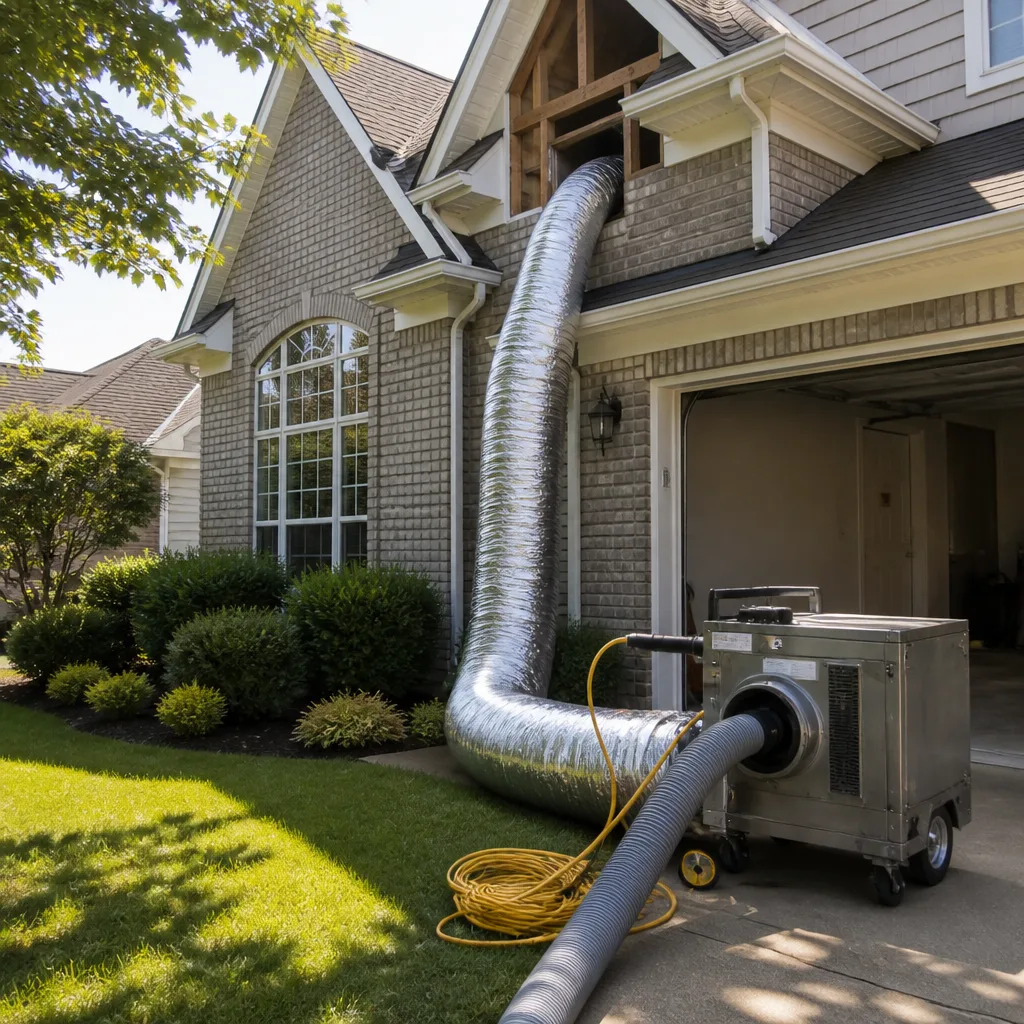 Whole-home duct cleaning
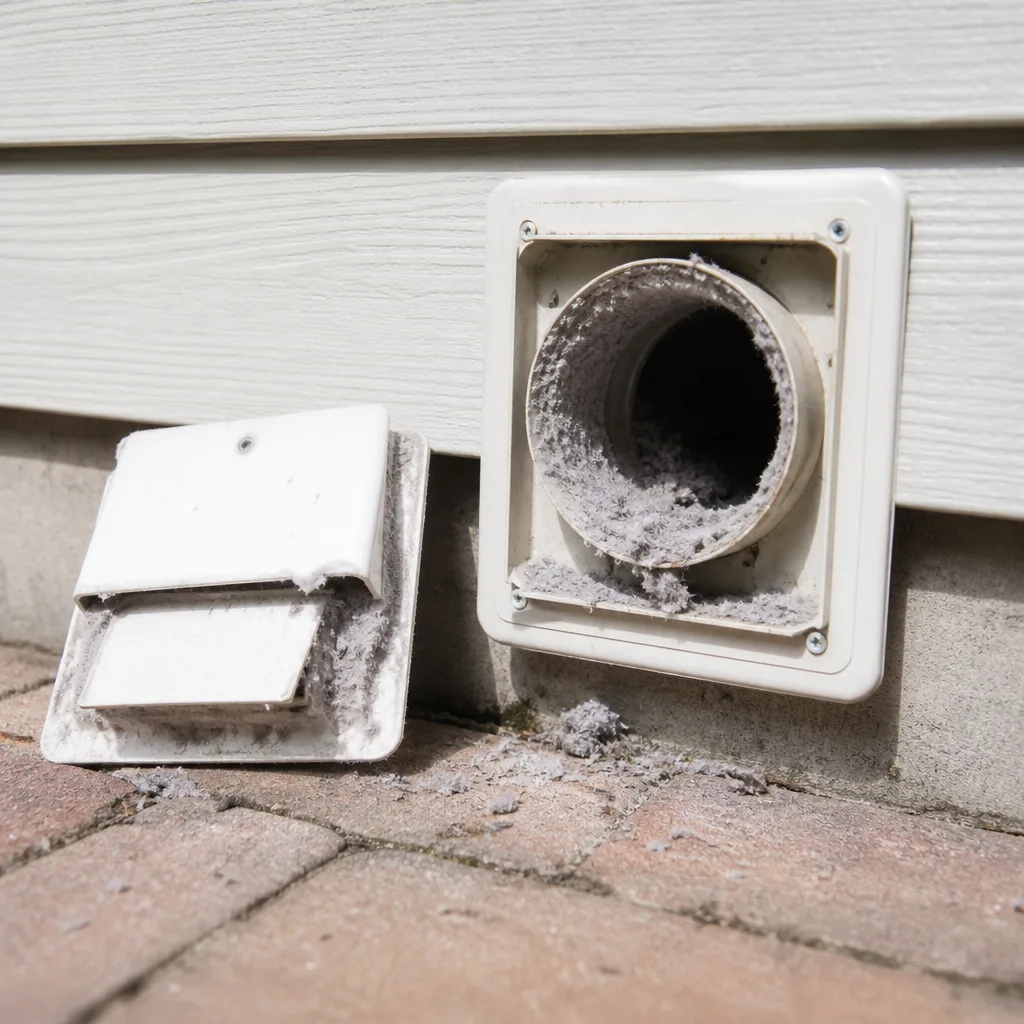 Dryer vent cleaning
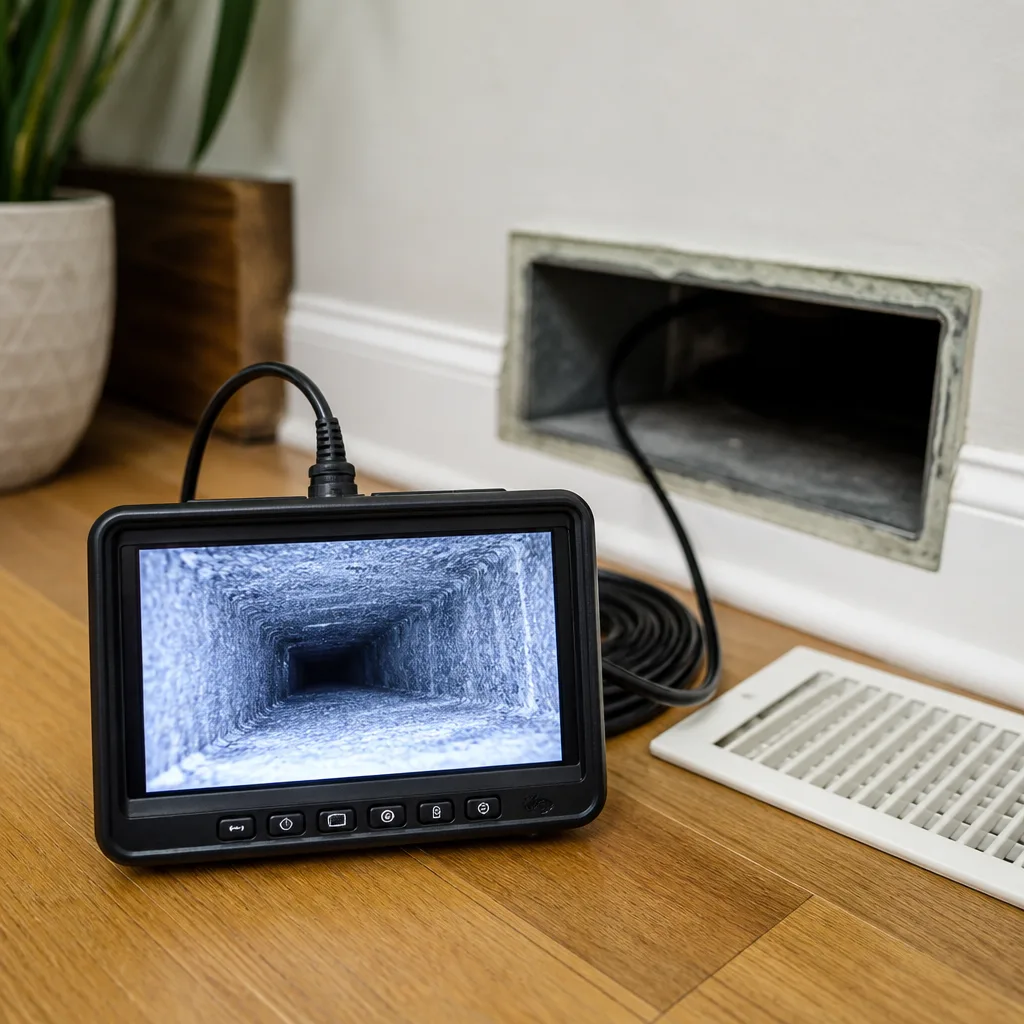 Camera inspection
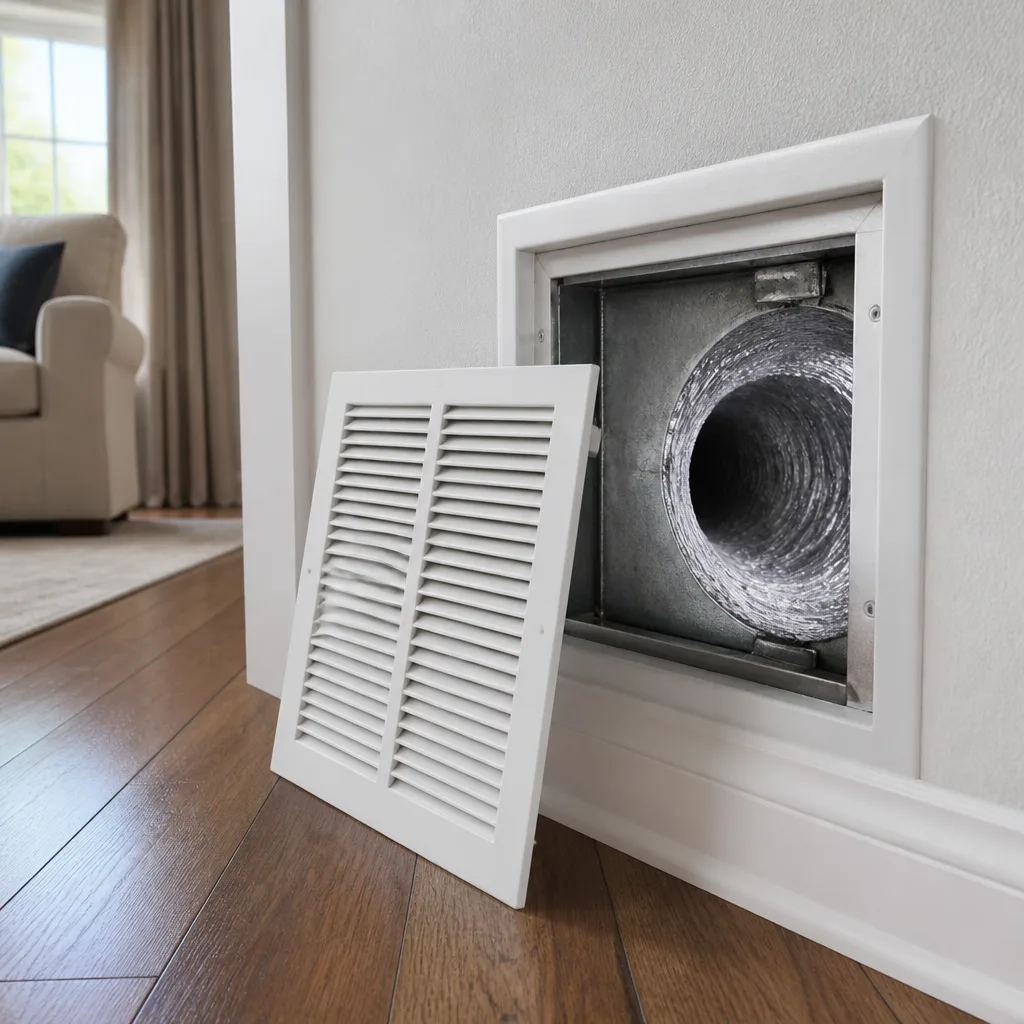 Sanitizing & deodorizing
Whole-system duct and dryer vent check with before-and-after photos - you see exactly what came out of your vents
That "$99 whole-house special" is a bait ad - the real number appears once they are in your hallway, or the "clean" is a shop-vac at the register. We photograph the inside of your ducts before and after instead.
The Complete Guide to Air Duct Cleaning in San Antonio
San Antonio homes run their air conditioning more than 220 days a year. That means the blower fan in your HVAC system is pulling air through your ductwork for nearly two-thirds of your life, every single year. Most duct cleaning guides online were written for Chicago basements or Atlanta humidity. This one was written from San Antonio, for San Antonio, where caliche dust and mountain cedar pollen create a duct contamination problem that looks nothing like what homeowners face in other parts of the country.
Quick Answer
Air duct cleaning in San Antonio typically costs between $350 and $600 for a whole-home system, depending on home size, number of returns, and how long it’s been since the last cleaning. A thorough job takes 3 to 6 hours, uses professional negative-pressure equipment rather than a shop vac, and should include a written price before any work begins. For homeowners weighing their options, our DIY vs Professional Air Duct Cleaning: The San Antonio Homeowner’s Decision Guide explains why equipment matters. For most San Antonio homes with pets or older return-air systems, a cleaning every 3 to 5 years is a realistic maintenance rhythm, not a one-time fix.
Styles & brands we work with
Table of Contents
- What Actually Builds Up Inside San Antonio Ducts
- Why San Antonio Ducts Get Dirtier Faster Than Most U.S. Cities
- The Step-by-Step Process of a Thorough Duct Cleaning
- What Professional Equipment Actually Does Differently
- What a Written Pre-Job Price Should Include
- How Often Do San Antonio Homes Really Need Duct Cleaning?
- What to Expect After the Cleaning Is Done
- Common Mistakes to Avoid
- When to Call a Professional
- Frequently Asked Questions
What Actually Builds Up Inside San Antonio Ducts
Most people picture dust when they think about dirty air ducts. That’s true, but it’s only part of the story. What we see inside San Antonio ductwork on a weekly basis is a layered mixture that forms over years, and each layer behaves differently.
The base layer is fine caliche dust. If you’ve lived in San Antonio for any length of time, you know caliche: it’s that pale, powdery limestone-based soil that gets tracked into the house on shoes and blows in through open windows during dry months. It’s lighter and finer than ordinary household dust, which means it travels deeper into the duct system and settles in places a standard filter never catches. Homes in newer developments on the far west and northeast sides, where construction churns up caliche for years after move-in, tend to have noticeably more of this base layer than older neighborhoods like Alamo Heights or Monte Vista.
On top of the caliche sits a sticky organic layer. San Antonio’s mountain cedar season, which runs from December through February, pushes enormous amounts of pollen into the air. Cedar pollen is sticky by nature, which is why it clings to window screens and car windshields. Inside ductwork, it acts like glue, trapping pet hair, skin cells, and fabric fibers that would otherwise blow through the system. We regularly pull what looks like gray felt from ducts in homes with two or more indoor pets, even when the homeowners vacuum diligently.
In humid months, particularly May through September, that organic layer can develop a third component: microbial growth. Duct interiors stay dark and can hold moisture from condensation on the cooling coil, especially in older systems or homes where the evaporator coil runs constantly during peak cooling season. The result is a deposit that doesn’t just look bad; it holds odors and releases them back into the living space every time the AC cycles on.
The combination of caliche, cedar pollen, pet dander, and occasional microbial growth is very specific to San Antonio. It’s not what homes in Phoenix deal with, and it’s not what homeowners in Houston face either. Which is exactly why a generic national guide won’t tell you what you actually need to know about air duct cleaning in San Antonio.
Why San Antonio Ducts Get Dirtier Faster Than Most U.S. Cities
San Antonio’s climate creates a perfect storm for duct contamination. Understanding the local factors helps explain why some homes need attention sooner than homeowners expect.
The 8-month cooling season is the biggest driver. In northern cities, furnaces run hard for four to five months and then sit idle through summer. That gives duct contaminants a dormant period. In San Antonio, the blower fan runs from March through November, sometimes longer. Every hour the fan runs, it pulls whatever is in the house through the return ducts and across the coil. More runtime means more total air movement, which means more debris deposited on duct walls and components.
Construction dust settles differently here. San Antonio has been one of the fastest-growing metros in the country for two decades. New subdivisions along Highway 151, Culebra Road, and the I-35 corridor north of Loop 1604 generate constant caliche dust during the build-out phase, which can last five to ten years before landscaping matures. Even if you don’t live in a new development, you drive through those areas, and that dust comes home on clothes and shoes.
Mountain cedar is unusually sticky. Most pollen types are dry and brittle. Mountain cedar, which dominates the winter allergy season in South Texas, has a resinous quality that makes it adhere to surfaces. When it gets pulled into return ducts and mixes with caliche dust, it forms a paste-like coating that’s far harder to dislodge than the loose dust you’d find in a Phoenix or Las Vegas duct system. This is a specific challenge that requires agitation with rotating brushes, not just vacuuming.
Pet dander concentrates in homes where the AC runs longer. San Antonio families with dogs and cats spend more months with windows closed than open. That’s not a judgment; it’s just math. When the house is sealed and the AC recirculates the same air, pet dander, hair, and the microscopic skin cells pets shed get pulled into the return side of the system and packed into ducts. We see this most clearly in homes with large-breed dogs and carpeted bedrooms.
None of this means your ducts are a health hazard or that you should panic. But it does mean that if you’ve lived in the same San Antonio house for five or more years and have never had the ducts cleaned, what’s inside them is almost certainly more substantial than what a national guide would lead you to expect.
The Step-by-Step Process of a Thorough Duct Cleaning
A proper our Air Duct Cleaning services in San Antonio follows five stages. Skipping any one of them reduces the quality of the result, which is why understanding the sequence matters before you hire anyone.
- Inspection. Before any cleaning starts, the technician should look inside the supply and return plenums, check the condition of the blower wheel, and assess the coil if accessible. This determines what kind of contamination is present, where it’s concentrated, and whether there are any issues like disconnected duct sections or visible mold that need to be addressed separately. At Morton’s, this inspection happens before we quote a price, so the written estimate reflects what’s actually in your system.
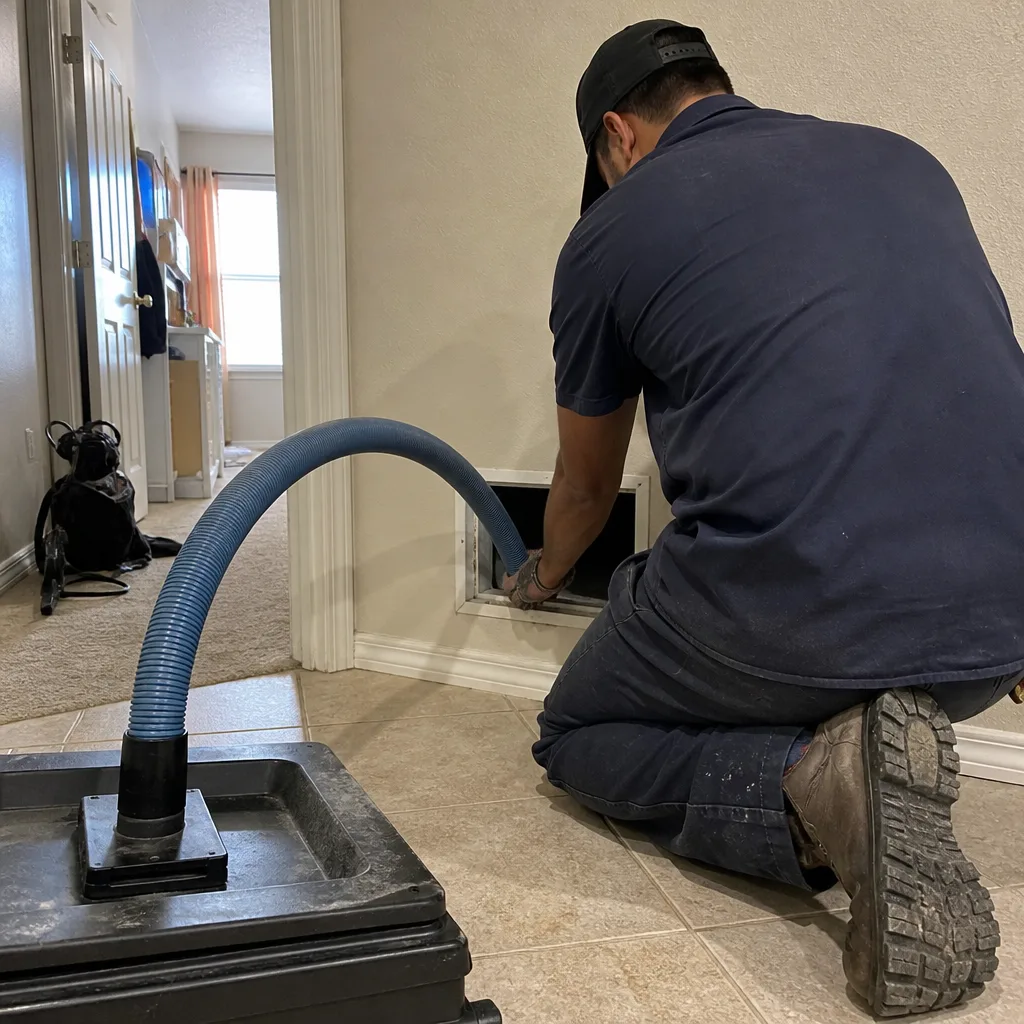
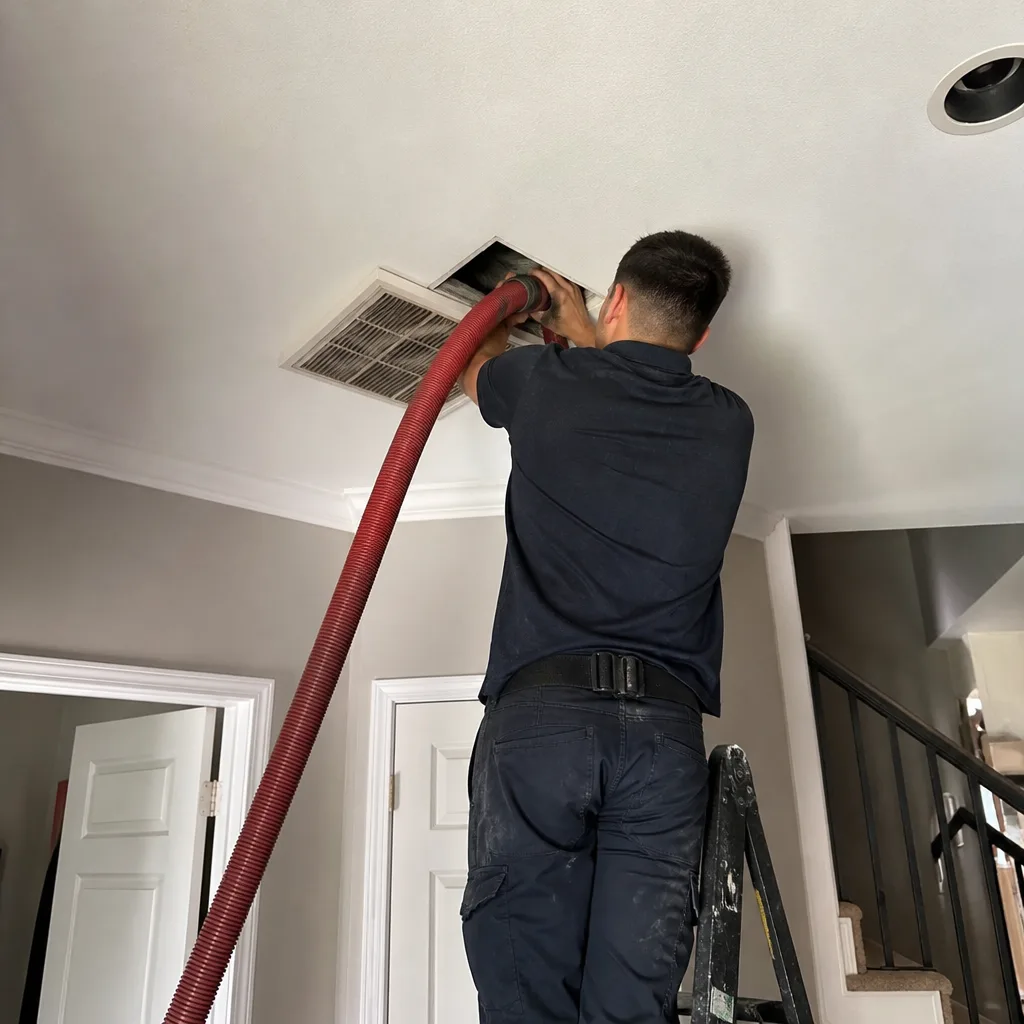
- Isolation. The register openings in each room are sealed, and the system is connected to a negative-pressure vacuum unit, usually at the furnace or air handler. This creates a controlled airflow that pulls dislodged debris toward the collection point rather than pushing it into living spaces. The best systems use HEPA-filtered negative air machines; anything less means fine particulates can escape back into the house.
- Agitation. This is the step that separates professional cleaning from a homeowner with a shop vac. Rotating brushes, compressed air wands, or cable-driven agitation tools are run through each duct run to physically break loose the caliche-pollen-pet dander layer we described earlier. Vacuum alone won’t remove it. The agitation tool has to reach every branch, not just the mains, and this takes time: typically an hour or more for a full system.
- Extraction. As debris is dislodged, the negative-pressure unit pulls it out of the system and into a sealed collection canister. A technician should walk the house during this phase, checking each register to confirm airflow and looking for any air leaks where dust might escape. The blower compartment, blower wheel, and evaporator coil (if accessible) should also be cleaned during this stage, since a clean duct system connected to a dirty coil defeats the purpose.
- Post-clean verification. A thorough crew doesn’t just pack up and leave. They should do a visual inspection of the main supply and return runs, confirm all registers are reattached and open, and provide some form of proof of completion. At Morton’s, every job ends with before-and-after photos, including a photo of the clean-up area, so you can see exactly what was done. That’s part of our 365-Day Done Right Promise: if the job isn’t done right, we make it right, full stop.
The entire process for an average San Antonio home, say a 2,000 to 2,500 square foot single-story with 10 to 14 registers, takes three to five hours. If a company quotes 45 minutes for the whole job, they’re skipping the agitation step, the extraction step, or both.
What Professional Equipment Actually Does Differently
There’s a persistent belief that air duct cleaning is a simple job anyone can do with the right vacuum attachment. That’s like saying an oil change is a simple job anyone can do with a wrench and a drain pan. Technically true, practically misleading.
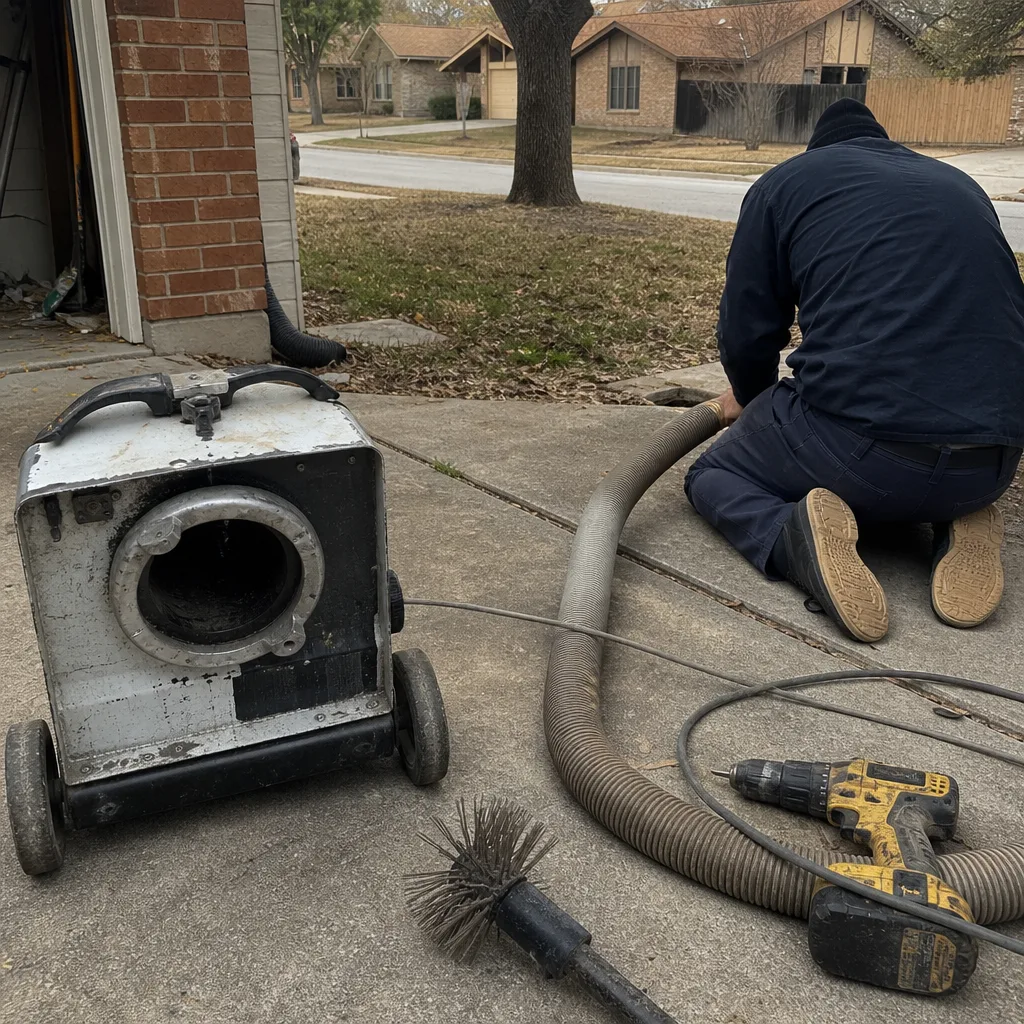
Professional duct cleaning in San Antonio relies on negative-pressure extraction systems built by brands like Rotobrush and Nikro. These aren’t shop vacs. A Rotobrush system, for example, connects to the main trunk line and creates substantial airflow through the entire duct network, pulling dislodged material back to a central collection point. The brush head rotates at high speed inside the duct, scrubbing the walls while the vacuum simultaneously removes what it loosens. A Nikro negative air machine serves as the power source for larger systems, moving enough air to keep the entire ductwork under negative pressure throughout the job.
Why does negative pressure matter? Because without it, agitation kicks dust into the living space. The vacuum has to be pulling from the system at all times, with the brush doing the loosening and the airflow doing the removal simultaneously. This is the single biggest difference between professional results and DIY attempts, and it’s why we use Rotobrush and Nikro equipment on every job in San Antonio.
The other piece of professional-grade kit that matters is the inspection camera. A technician who can show you the inside of your return duct before cleaning, with the gray felt-like layer of caliche and pollen clearly visible, and then show you the same duct after cleaning, is demonstrating accountability. You shouldn’t have to take anyone’s word that the job was done. You should be able to see it. If a company doesn’t offer before-and-after documentation, ask why. Ours includes it automatically, along with a photo of the clean-up before the crew leaves, because we believe you should be able to verify every claim we make.
Accessories matter too. HEPA-filtered vacuums prevent the fine fraction of caliche dust from being exhausted out the back of the machine and back into your house. Drop cloths and shoe covers are standard practice on every Morton’s visit, not an upsell. And if we’re working in a home with pets or a napping child, we run quieter tools and use pet-safe product choices where available. The equipment does the cleaning; the technician’s judgment is what protects the house around it.
What a Written Pre-Job Price Should Include
San Antonio homeowners shopping for air duct cleaning will see a wide range of quoted prices, and the spread can be confusing. For help vetting providers, see How to Hire a Air Duct Cleaning Contractor in San Antonio: A Step-by-Step Guide. Here’s what a legitimate written estimate should include, line by line.
A realistic whole-home price range. For a typical San Antonio home, expect to pay between $350 and $600 for a complete air duct cleaning. Homes over 3,000 square feet, or with two separate HVAC systems (common in two-story builds from the 1990s and 2000s), may run $700 to $900. If a quote comes in significantly under $300, ask hard questions about what’s included. A crew that’s in and out in an hour hasn’t cleaned your ducts; they’ve vacuumed your registers.
What the price should cover:
- Full cleaning of all supply and return duct runs, including branch lines, not just the main trunks
- Cleaning of the blower compartment and blower wheel (often the dirtiest component in the system)
- Cleaning of the evaporator coil if accessible without cutting into the plenum
- Cleaning or replacement of the air filter
- All register covers and grilles cleaned and reattached
- Before-and-after documentation of some kind
Line items that should make you pause: per-vent pricing, which incentivizes the technician to move fast and usually ends up costing more than a flat system price; heavy upcharges for “sanitizing” or “deodorizing” sprays without an explanation of what the product is and why it’s needed; separate charges for shoe covers, drop cloths, or basic courtesy items; and any “duct replacement” recommendation made without photographic evidence of a real problem.
At Morton’s Air Duct Cleaning, we provide a written price before any work starts, every single time. That price covers the entire system, not a per-vent rate that multiplies with every register in your house. We’ve been doing it that way since 2005, because we believe families in San Antonio deserve to know the full cost before anyone touches a tool. The 365-Day Done Right Promise isn’t a fine-print warranty; it’s on every job we do. If the clean isn’t right, we make it right. No restocking fee, no argument, no invoice.
How Often Do San Antonio Homes Really Need Duct Cleaning?
The short answer: more often than national guides suggest, less often than the alarmists claim. Most national organizations recommend every 3 to 5 years as a general guideline. In San Antonio, where the AC runs 220-plus days a year and caliche dust is a constant presence, the 3-year end of that range applies to many households.
Here’s a realistic maintenance rhythm based on household type:
- Homes with two or more indoor pets: every 2 to 3 years. Pet dander and hair are the fastest-accumulating contaminants we see, and they pack into the return side of the system quickly when the AC recirculates air for months on end.
- Homes with allergy-sensitive family members: every 2 to 3 years, and consider upgrading the filter during cedar season. A good Aprilaire or Honeywell media filter can make a measurable difference in how much pollen makes it into the ducts in the first place.
- Average San Antonio home with no pets and no respiratory concerns: every 3 to 5 years. This is the baseline, and it’s what most homeowners should expect.
- Homes in active construction zones or after a major renovation: clean once after the work is complete, then return to your normal schedule. Drywall dust and caliche from construction settle into ducts and won’t leave on their own.
- Homes with older return-air systems that pull from a single central return: every 2 to 3 years. These systems concentrate all the household air through one return, which tends to load up faster than systems with multiple returns spread across the house.
One cleaning is rarely a forever solution in San Antonio. The climate and the soil ensure that. But a realistic maintenance rhythm, paired with regular filter changes, keeps the worst of the accumulation in check. For most families, that means scheduling a cleaning every few years and not waiting until you can see dust on the register covers or smell a musty odor when the fan kicks on. By the time you notice it, the ducts are well past due. Our air duct cleaning service in San Antonio has more detail on what to look for between cleanings.
What to Expect After the Cleaning Is Done
A proper duct cleaning changes how the house feels, but the changes aren’t always dramatic on day one. Here’s what’s realistic.
You’ll notice less dust settling on furniture. This is usually the first thing San Antonio homeowners report after a cleaning. When the ducts are no longer holding a reservoir of loose caliche dust, the amount of fine dust that settles on flat surfaces between cleanings drops noticeably. It’s not a magic cure; you’ll still see dust from normal living. But the volume changes, and you’ll feel like you’re dusting less often.
Odors should diminish. That stale, musty smell that comes from the vents when the AC first turns on typically fades once the accumulated pet dander and organic layer are removed from the ducts and coil. If the smell persists after a cleaning, that points to a different issue, possibly in the condensate drain line or the coil itself, and it’s worth having a technician look.
Airflow may improve. When the blower wheel and coil are clean, the system moves air more efficiently. You may notice better airflow from registers that previously felt weak. This can translate to more even temperatures in rooms that always ran warm in summer. Homes with rooms on the far end of the duct run, common in San Antonio ranch-style floor plans, benefit most from this.
You should receive documentation. After the job, you should have some form of visual proof: before-and-after photos, a summary of what was cleaned, and a receipt that matches the written estimate. At Morton’s, every completed job includes a photo of the clean-up before the crew leaves, because you shouldn’t have to wonder whether the floors were protected. If the company won’t show you what they did, that’s a signal worth paying attention to.
If you don’t notice any difference at all, including no visible improvement in duct photos, that’s a problem. The 365-Day Done Right Promise exists for exactly that situation. Paul Adeyemi built Morton’s Air Duct Cleaning on the principle that a homeowner should never have to fight for a job done correctly. If it’s not right, we make it right.
Common Mistakes to Avoid
- Hiring based on per-vent pricing before confirming the total. A $9-per-vent price sounds cheap until you count 18 vents and discover the bill is $162 plus a $200 “setup fee.” Ask for the total system price upfront, in writing.
- Assuming the furnace filter protects the ducts. A standard 1-inch filter catches large particles to protect the equipment, not to keep the ducts clean. Fine caliche dust passes right through. The ducts will still load up over time.
- Waiting until you can see or smell the problem. By the time dust is visible on register covers or a musty smell comes from the vents, the accumulation inside the ducts is far beyond what a routine cleaning addresses quickly and inexpensively.
- Choosing the cheapest bid without checking what’s included. In San Antonio, the $199 whole-house duct cleaning specials are almost always a foot-in-the-door price. What’s excluded matters more than what’s included. A legitimate written estimate itemizes the scope.
- Skipping the blower wheel and coil. Cleaning the ducts while leaving a heavily dusted blower wheel or coil in place is like mopping the floor and leaving the mop bucket of dirty water in the middle of the room. The system re-contaminates quickly.
- Not asking for documentation. If a company won’t show you before-and-after photos, assume the job won’t stand up to scrutiny. Any legitimate duct cleaner in San Antonio should be proud to show their work.
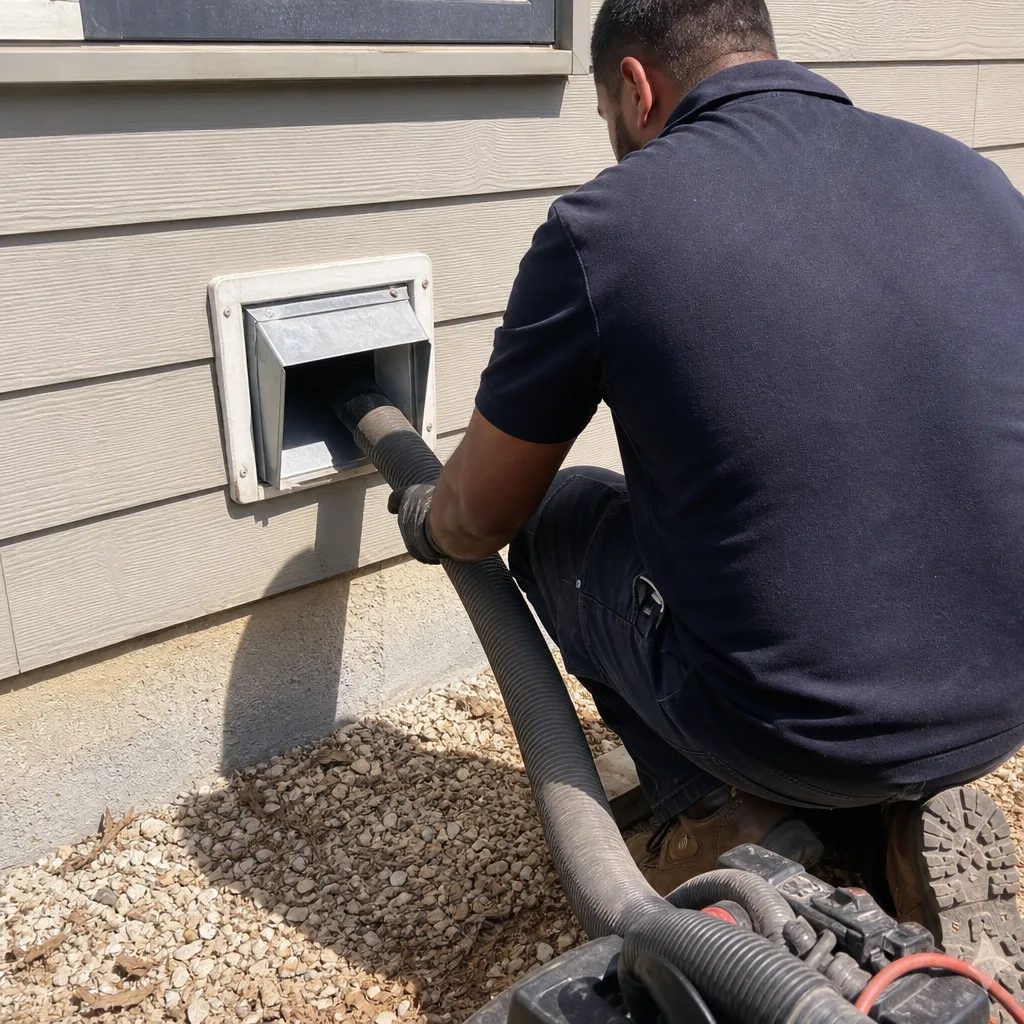
- Treating dryer vents as an afterthought. Duct cleaning and dryer vent cleaning are different services. A home can have spotless HVAC ducts and a dangerously blocked dryer vent. If you’re having one done, ask about the other. Our dryer vent cleaning in San Antonio page explains the difference in detail.
When to Call a Professional
Certain situations call for a professional air duct cleaning company rather than a wait-and-see approach. If you’ve lived in your San Antonio home for three or more years and have never had the ducts cleaned, that’s the most common trigger. If you have indoor pets, especially multiple or large-breed dogs, the timeline shortens. If anyone in the household has cedar allergies or other respiratory sensitivities, cleaning the ducts before the December-to-February mountain cedar season can reduce the total pollen load in the house. If you’ve completed a renovation, especially one that involved drywall work, caliche-heavy construction dust settles into ducts and should be removed. And if you notice visible dust around register covers, weak airflow from some vents, or a persistent stale odor from the system, those are signs the ducts need attention sooner rather than later. Mortons Air Duct San Antonio offers free estimates in San Antonio. Call (903) 354-8393 to talk through what’s going on with your system. A live person answers, 24/7, and we’ll give you a straight answer before we give you a price.
For a full picture of what we do and how we work, start at our Mortons Air Duct San Antonio home page or read the deep dive on our Air Duct Cleaning in San Antonio service page. If you’re also concerned about the dryer side of things, we cover that on our Dryer Vent Cleaning in San Antonio page as well.
Frequently Asked Questions
Air duct cleaning in San Antonio typically costs between $350 and $600 for a whole-home system, with larger homes or dual-system setups running $700 to $900. At Morton’s, you get a written price before any work starts, so the number you approve is the number you pay. Call (903) 354-8393 for an exact quote; estimates are free and there’s no obligation.
A thorough air duct cleaning in San Antonio takes three to five hours for an average home. If a company finishes in under an hour, they skipped the agitation or extraction step, which means the ducts weren’t actually cleaned. We take the time the job needs, and we document the results before we leave.
Air duct cleaning is legitimate for San Antonio homes where caliche dust, cedar pollen, and pet dander have accumulated over three or more years of continuous AC operation. Not every home needs it every year, and the industry has its share of low-rent operators, but a properly performed cleaning with documented results makes a measurable difference in dust levels and system airflow. Our price is written before work begins, and the 365-Day Done Right Promise covers every job.
Ask for before-and-after photos, preferably from inside the ductwork using an inspection camera. A legitimate company should be able to show you the condition of the ducts before and after cleaning. Morton’s includes this documentation automatically on every job, along with a photo of the clean-up, so you never have to take our word for it. Call (903) 354-8393 and we’ll walk you through exactly what you’ll receive.
Duct cleaning can reduce the total load of dust, pollen, and dander circulating through a San Antonio home, which may help allergy sufferers, particularly during cedar season. It’s not a substitute for a good furnace filter or medical advice, but removing the accumulated reservoir of allergens from the ducts is a sensible step for households with sensitivity. Pairing a duct cleaning with a quality media filter from Aprilaire or Honeywell can extend the benefit.
Most San Antonio homes need duct cleaning every 3 to 5 years, with households that have indoor pets or allergy-sensitive members trending toward the shorter end. Homes in active construction areas or those with single central returns may need attention even more frequently. A realistic maintenance rhythm keeps the system functioning well without cleaning more often than necessary.
The Bottom Line
San Antonio’s unique combination of caliche dust, sticky mountain cedar pollen, and a cooling season that runs most of the year means local ductwork accumulates contamination faster than homes in most other U.S. cities. A proper cleaning follows a defined sequence: inspection, isolation, agitation, extraction, and verification. A written price before work starts is non-negotiable. And for most families, a cleaning every three to five years keeps the system in balance. Morton’s Air Duct Cleaning has served San Antonio since 2005 with professional equipment from Rotobrush and Nikro, a written price on every job, and the 365-Day Done Right Promise. Call (903) 354-8393 for a free estimate, and a real person will answer.
Written by Paul Adeyemi, Owner at Mortons Air Duct San Antonio, serving San Antonio since 2005. For more guides & resources, visit our blog.
See the difference
 Before
 After
After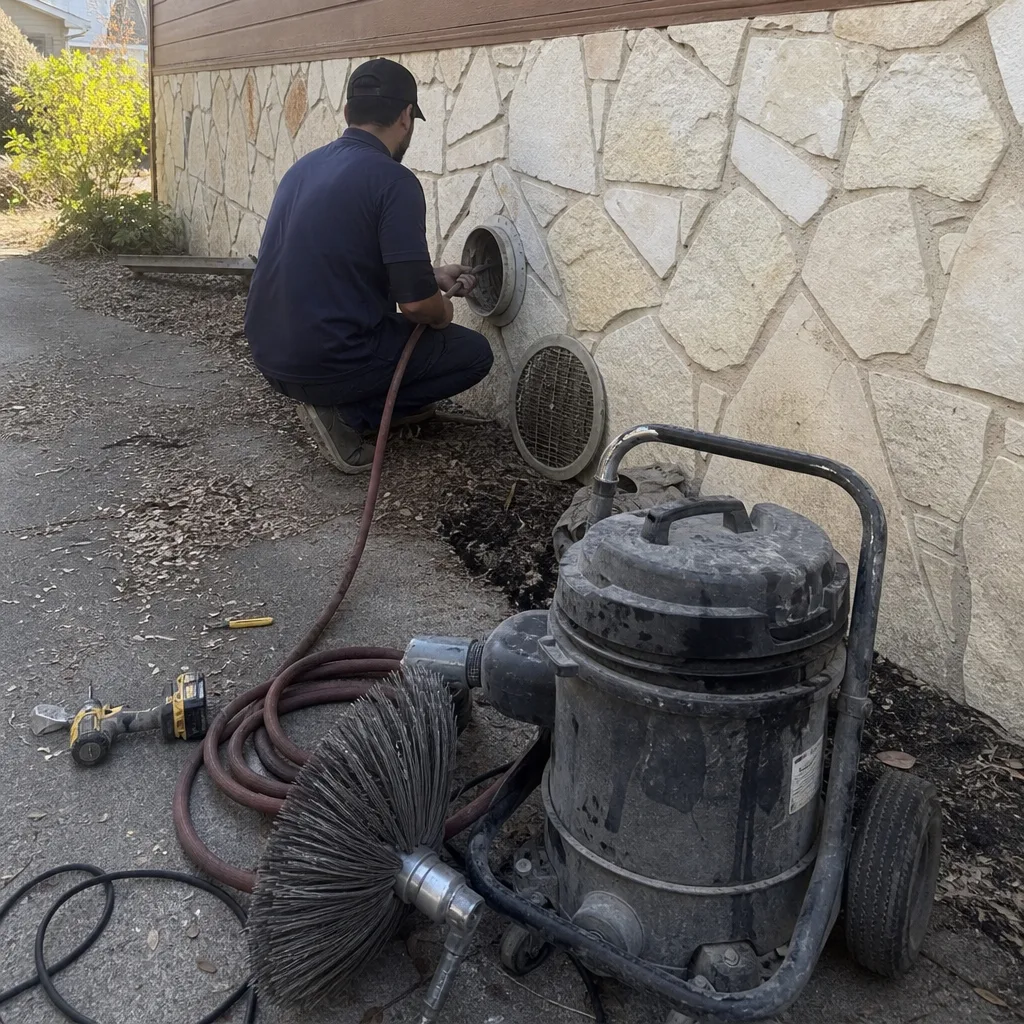 Before
 After
After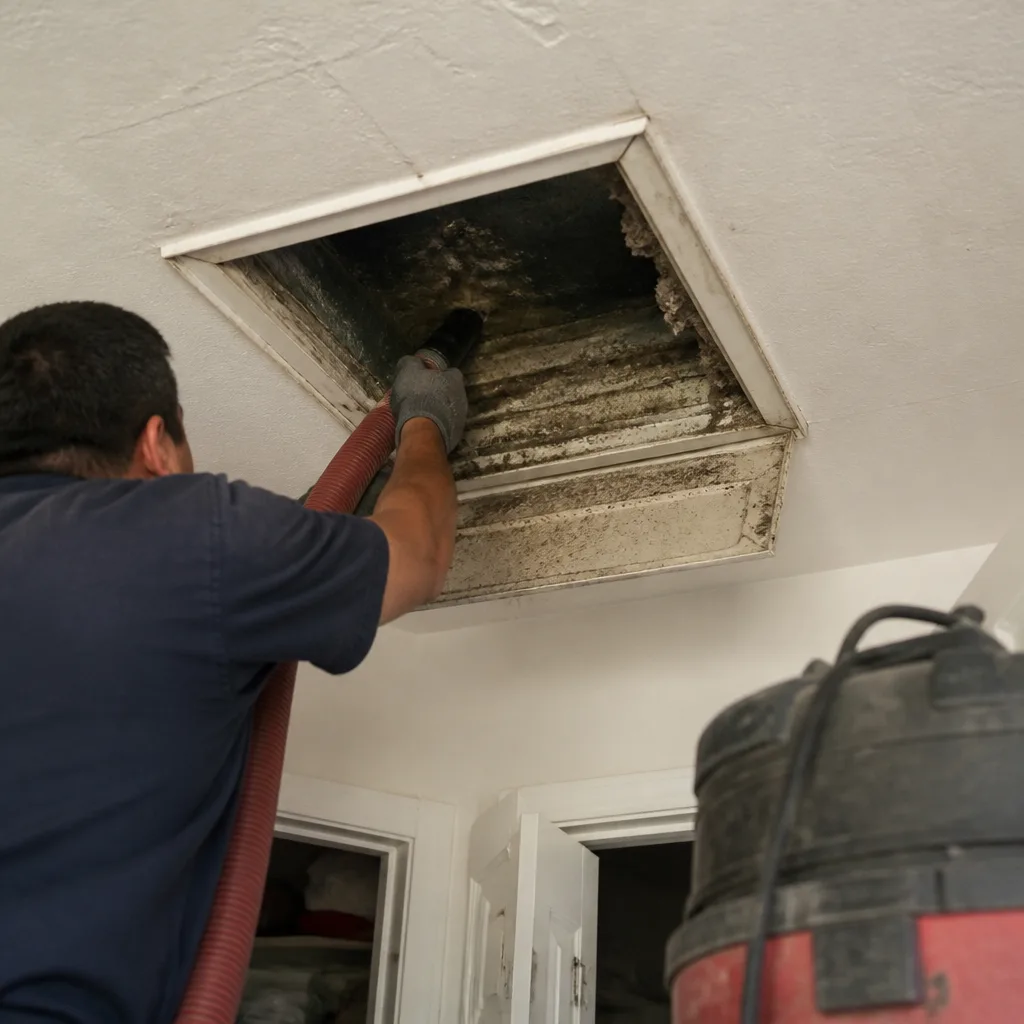 Before
 After
After