
Last updated October 15, 2026
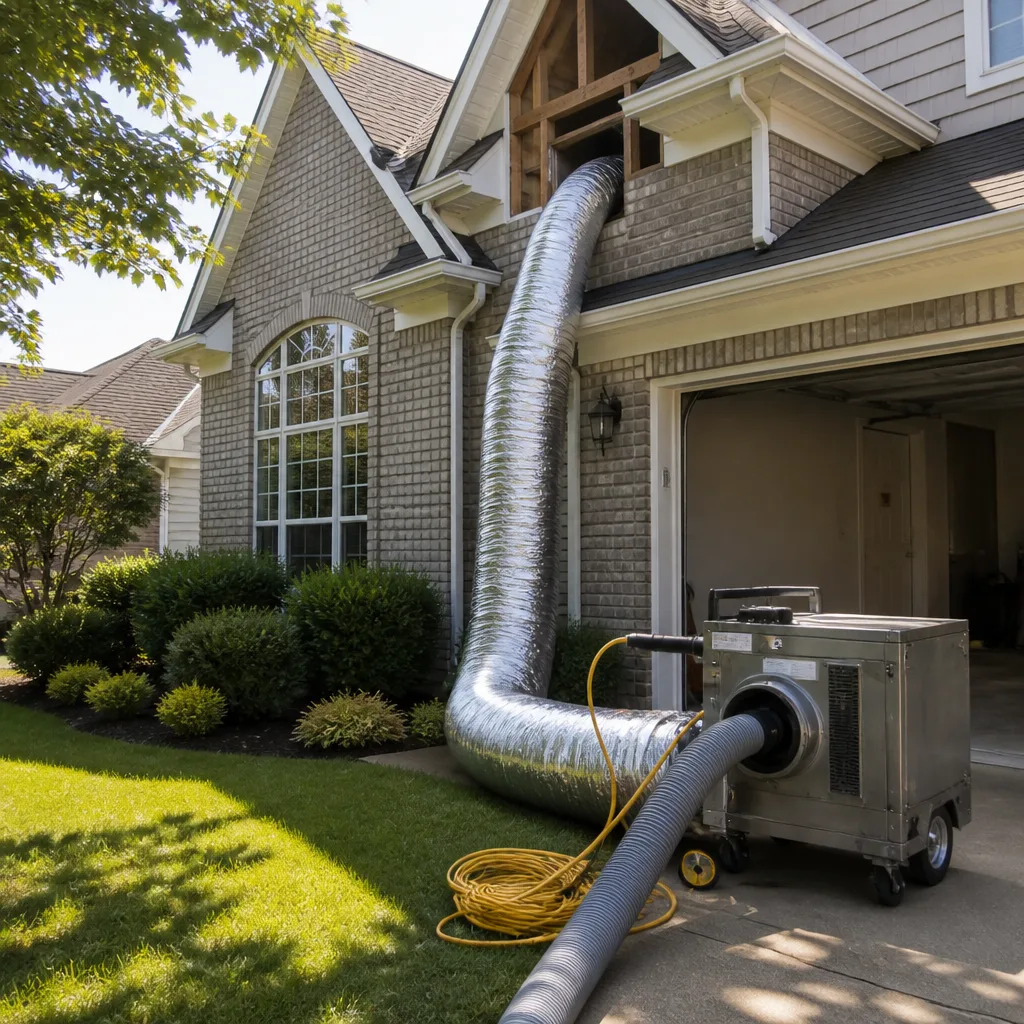 Whole-home duct cleaning
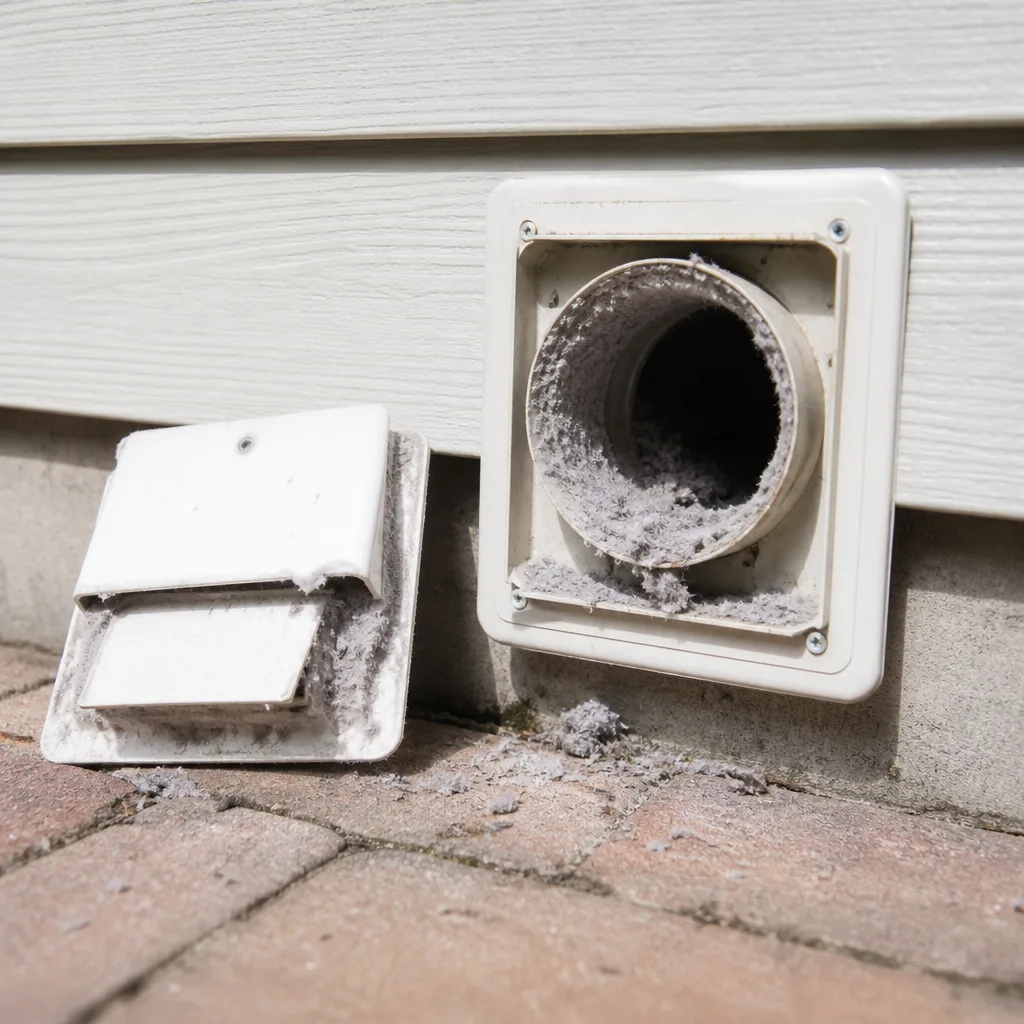 Dryer vent cleaning
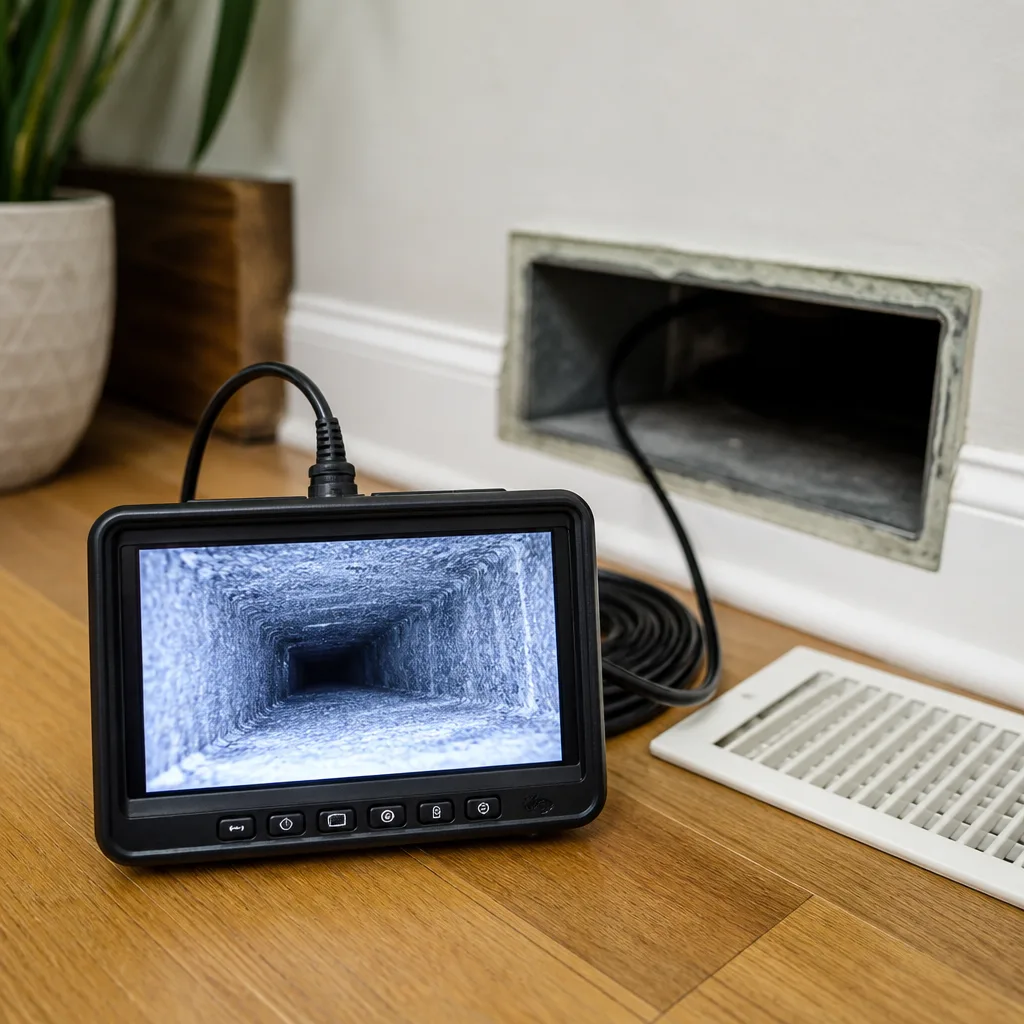 Camera inspection
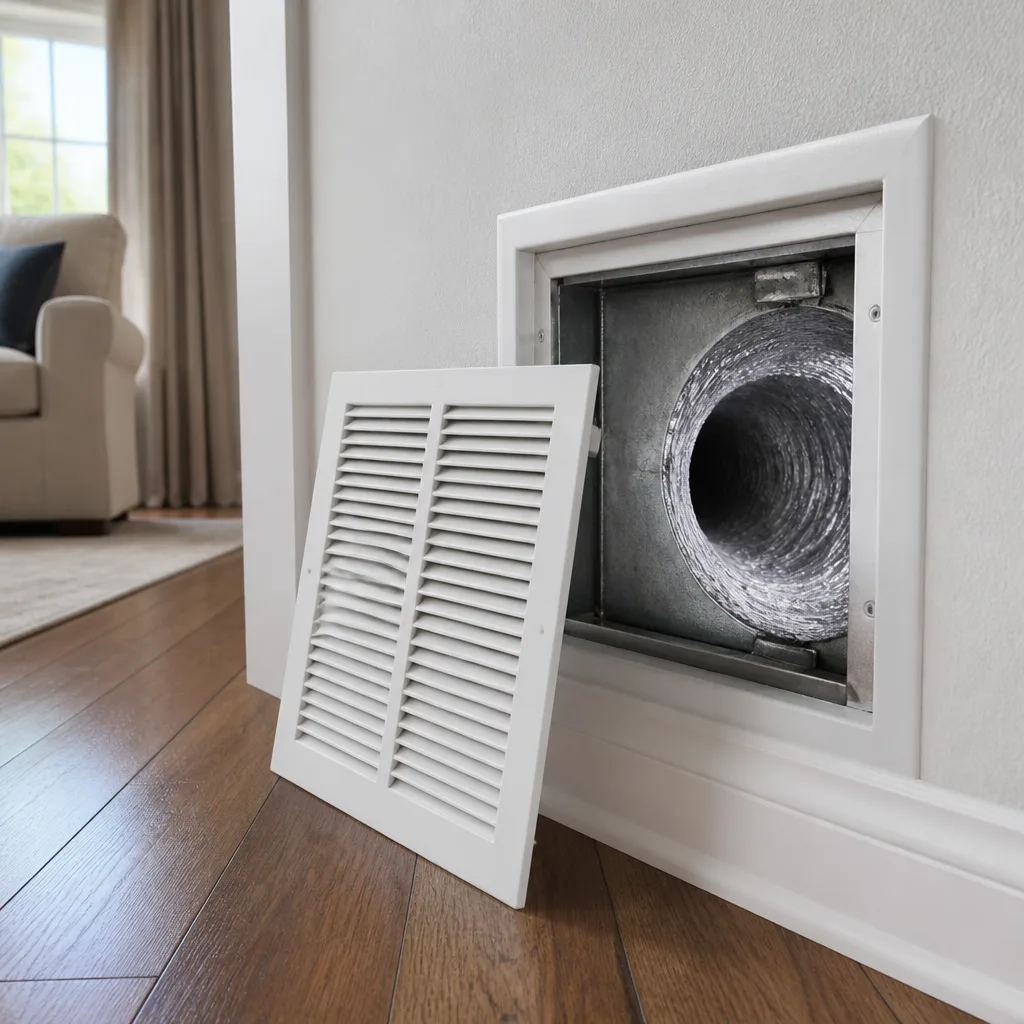 Sanitizing & deodorizing
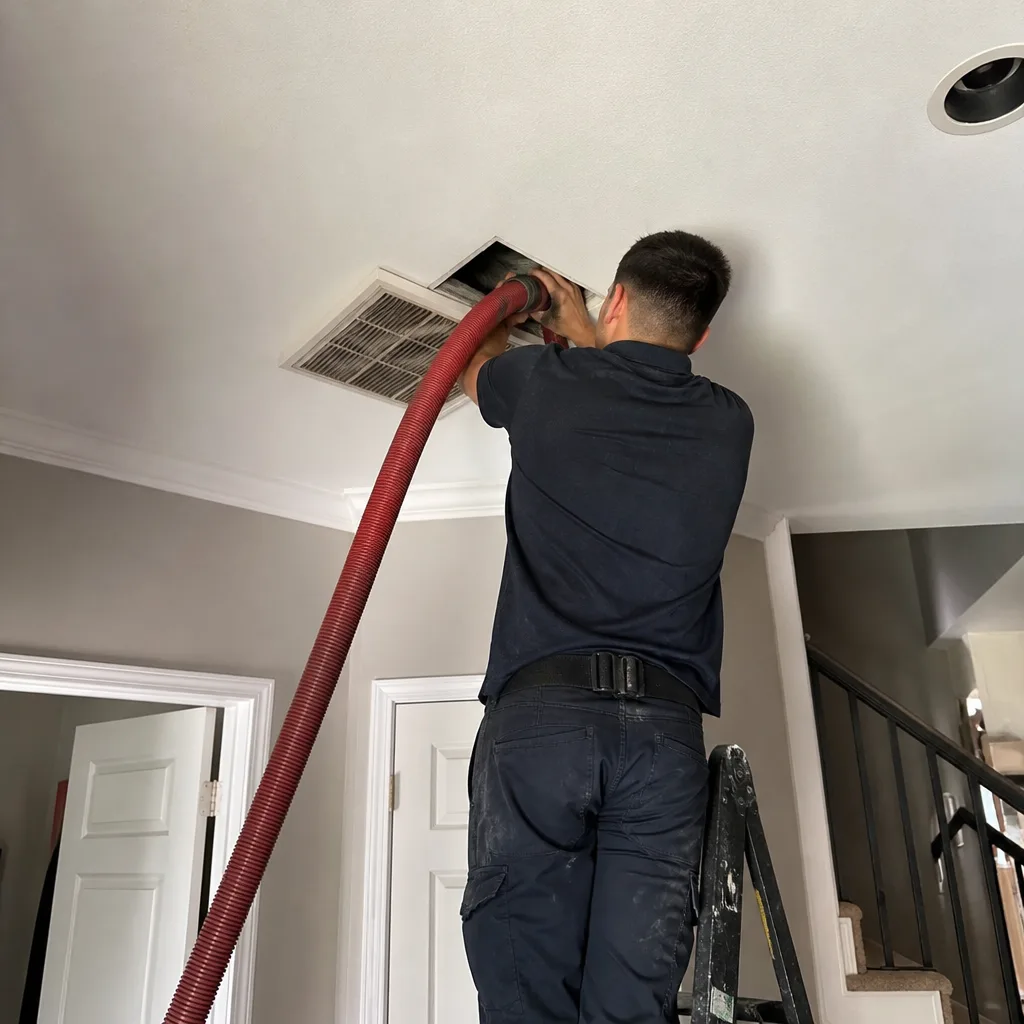
Whole-system duct and dryer vent check with before-and-after photos - you see exactly what came out of your vents
That "$99 whole-house special" is a bait ad - the real number appears once they are in your hallway, or the "clean" is a shop-vac at the register. We photograph the inside of your ducts before and after instead.
Air Duct Cleaning Cost Breakdown: The San Antonio Homeowner’s Reference for 2026
If you’ve lived in a San Antonio home for more than a couple of years, you’ve seen the flyers. A $49 whole-house air duct cleaning special, sometimes $69, occasionally printed on a postcard with a picture of a family smiling at a spotless vent. Here’s what those flyers never tell you: that price is a door opener, not a service quote. The technician who shows up for $49 has to find a way to make the visit worth their time, and that usually means a hard pivot to a $600 or $800 “recommended package” once they’re standing in your hallway. This guide breaks down what a legitimate Air Duct Cleaning actually costs in San Antonio in 2026, what drives that cost, and how to spot the difference between a real quote and a setup. By the time you finish reading, you’ll know more about duct pricing than the person on the other end of any sales call.
Styles & brands we work with
Quick Answer
In San Antonio in 2026, a legitimate whole-home air duct cleaning for a 3-bedroom, 2,000-square-foot house typically costs between $350 and $550 with a reputable, equipment-licensed company. Larger homes with 5+ bedrooms and zoned HVAC systems range from $600 to $850. That $49 flyer price is not the real cost of the service; it’s a foot in the door for an upsell, and the final invoice on those visits almost always lands close to or above what a straight-talking company would have quoted from the start.
Table of Contents
- The Real Price Range for Air Duct Cleaning in San Antonio in 2026
- Where Your Money Actually Goes: A Line-Item Breakdown
- Per-Vent Pricing vs. Flat-Home Pricing: Which Costs You More
- How Square Footage, Vent Count, and Home Age Change the Price
- Add-Ons Worth Considering and Add-Ons to Skip
- Why a Written Price Before Work Starts Is Non-Negotiable
- Common Mistakes to Avoid
- When to Call a Professional
- Frequently Asked Questions
- The Bottom Line
The Real Price Range for Air Duct Cleaning in San Antonio in 2026
Let’s skip the vague talk. Here’s what a real whole-home air duct cleaning costs in San Antonio in 2026, based on the work we do every day across this city, from Alamo Heights to Stone Oak to the older ranch homes on the Northwest Side. These are whole-system prices, not per-vent teaser rates:
- 2-bedroom home, under 1,200 sq ft: $250 to $350. These homes typically have 6 to 10 vents and a single HVAC return. The job takes 2 to 3 hours.
- 3-bedroom, 1,500 to 2,200 sq ft: $350 to $550. This is the most common San Antonio home size and the number you’ll see quoted most often. Expect 10 to 14 vents and 2 returns.
- 4-bedroom, 2,400 to 3,000 sq ft: $500 to $700. These homes often have zoned systems or two separate air handlers, which means more supply runs and more time.
- 5-bedroom or custom builds, 3,200+ sq ft: $650 to $850+. Large homes in areas like Dominion or Alamo Ranch frequently have multiple systems, deep return drops, and 18 to 25 vents. This is a full day’s work for a two-person crew.
Why such a wide spread? Because legitimate cost depends on real variables: how many vents you have, how many returns, whether the HVAC system is in a hot attic (most San Antonio homes) or a closable utility space, how long it’s been since the last cleaning, and whether there’s visible construction debris or pet hair loading. A $350 house and a $550 house can look identical from the curb. The difference shows up when the technician opens the first return grill and sees what’s actually inside.
One more note before we move on: San Antonio’s climate matters here, not just as small talk. Our long cooling season means HVAC systems run from March through November most years. That’s eight to nine months of continuous air circulation, pulling dust, pet dander, and outside pollen through the system. The same house in Minneapolis might go five years between cleanings. Here, with our juniper and oak pollen seasons and a system that rarely rests, three to five years is the honest schedule for most families. For a full maintenance breakdown, see our Air Duct Cleaning Maintenance Checklist for San Antonio Homeowners.
Where Your Money Actually Goes: A Line-Item Breakdown
When a company quotes you a whole-system price in San Antonio, here’s what that number is actually paying for. Understanding this breakdown is the single biggest tool you have for evaluating whether a quote is real or theatrical, because the $49 special skips most of these line items entirely.
- Labor time, two technicians, 2 to 5 hours. Proper duct cleaning is a two-person job. One technician runs the vacuum collection unit and negative air machine. The other works vent by vent with agitation tools. On a 2,000-square-foot San Antonio home with 12 vents, plan on 3 to 4 hours of actual work, plus setup and breakdown. A one-person crew doing the job in 90 minutes is not doing the same job.
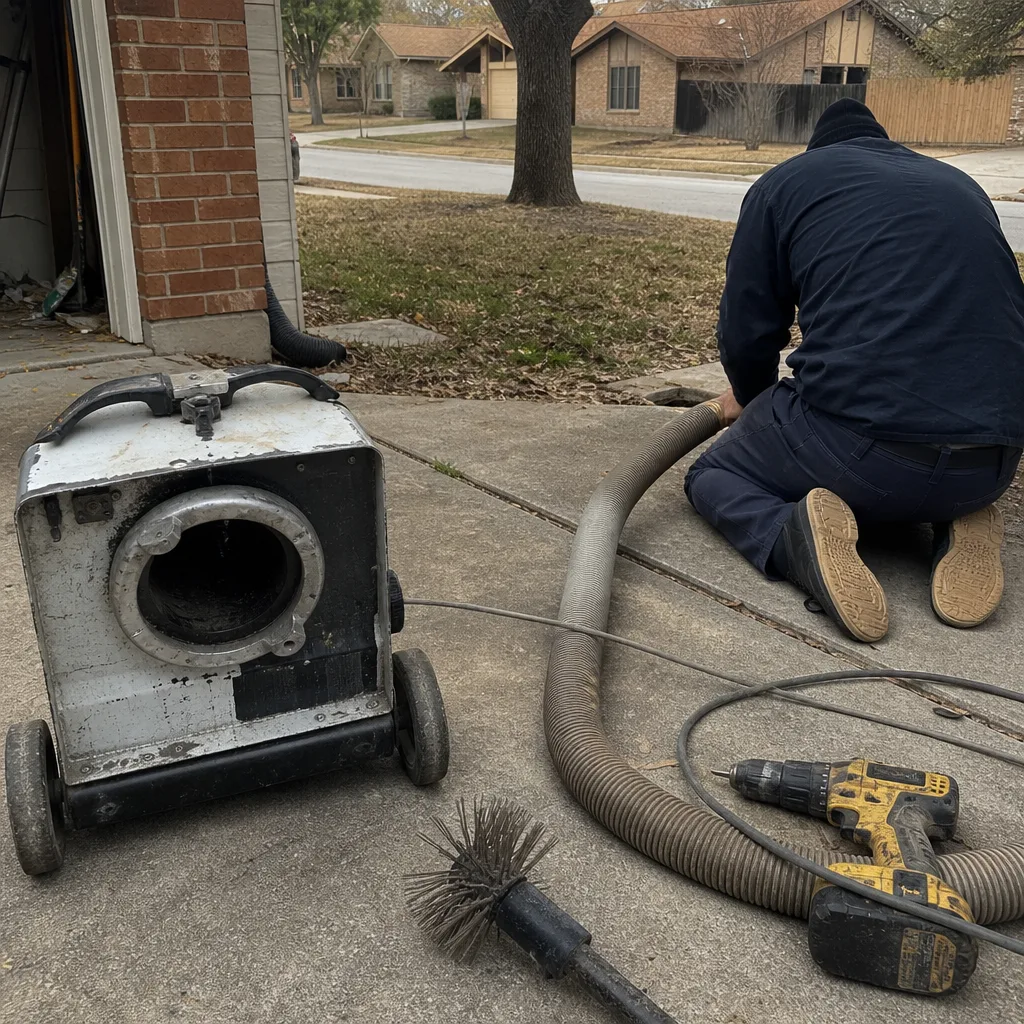
- Professional equipment and its real cost. The machines that do this work properly are not cheap. A Rotobrush system, the kind we use at Morton’s, runs north of $30,000 new for the truck or trailer-mounted units and handheld variants. Nikro negative air machines and HEPA-filtered vacuums are another several thousand each. Then there’s the ongoing cost: HEPA filters replaced regularly, whip heads and brush heads that wear down, hose sets that crack in a San Antonio attic’s 130-degree summers. Legitimate companies factor that depreciation into every job. The $49 operator is using a small portable vacuum that belongs in a detail shop, not your ductwork.
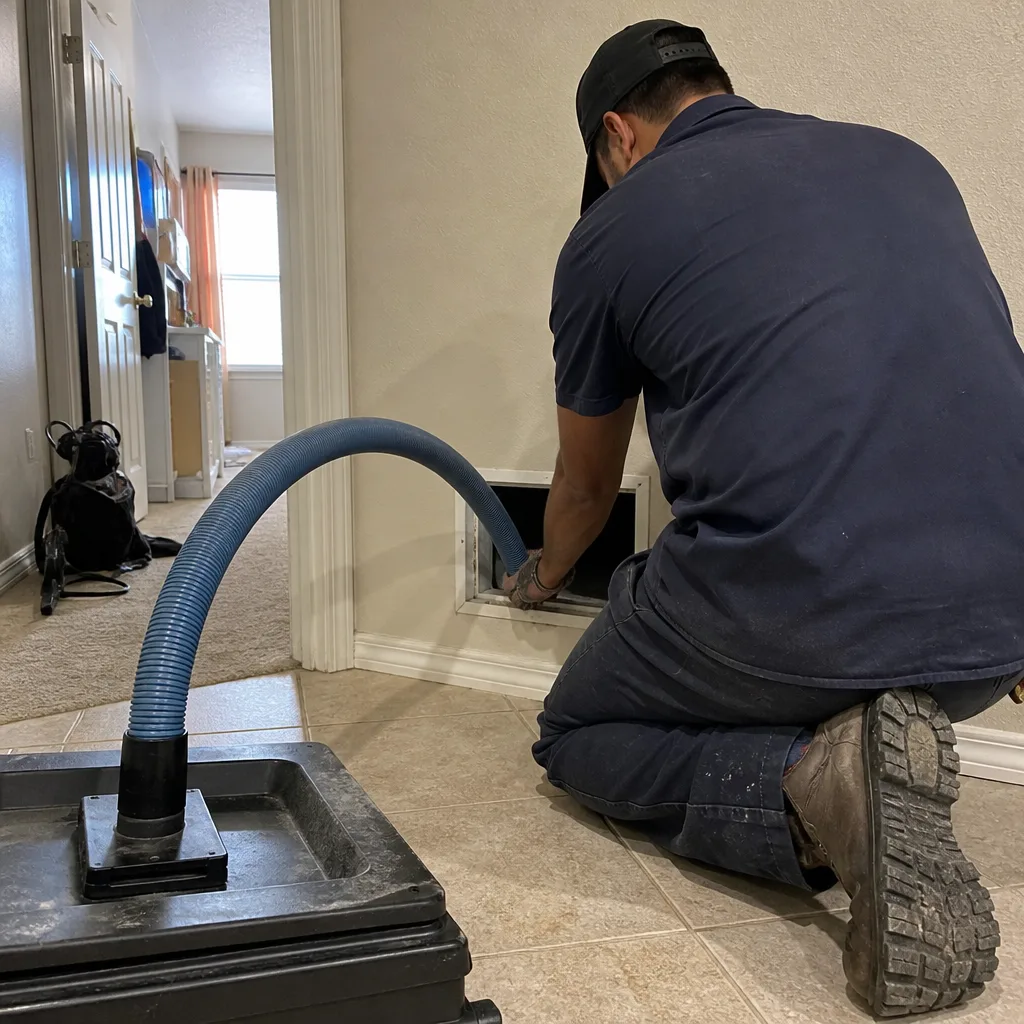
- Supply-side cleaning, vent by vent. Every supply register in your home gets individually opened, agitated, and vacuumed. The technician should physically reach each register, remove the grill, run an agitation tool through the run, and reseat the grill. In a house with 12 vents, that’s 12 individual stops, not a single hose waved at the main trunk.
- Return-side cleaning. Your return ducts pull air back to the HVAC system, and in San Antonio, the main return is often an open chase in a hallway wall or a large drop near the unit. This is where you get the felting effect: years of dust, pet hair, and candle soot pressed into the return walls. Return-side cleaning takes nearly as long as the entire supply side, and low-ball quotes almost always skip it or give it a cursory pass.
- Post-clean inspection and walkthrough. A legitimate job ends with the technician showing you what came out and what your system looks like now. At Morton’s, that includes going over the before photos and a photo of the clean-up before the crew leaves. If a company finishes in two hours, hands you an invoice, and vanishes, you paid for a partial job.
- The written price itself. It might sound odd to list the quote as a cost component, but it is. Companies that commit to a written price before work starts are accepting the risk that the job will take longer than estimated. A flat-rate company that misjudges a 6-hour job still charges you the quoted price. A per-vent company just charges you more. That certainty has value.
Per-Vent Pricing vs. Flat-Home Pricing: Which Costs You More
There are two pricing structures in the air duct cleaning industry, and they reward different behavior. Understanding the difference is the quickest way to protect yourself in San Antonio, where air duct cleaning companies run the full spectrum from bait-priced national franchises to local crews who’ve been at it for decades.
Per-vent pricing is exactly what it sounds like: you pay a set rate per vent cleaned, sometimes plus a separate charge for the return or the main trunk. A typical per-vent offer in San Antonio in 2026 runs $25 to $45 per vent, with the return often billed at the equivalent of 2 to 3 vents. On the surface, it sounds transparent, but here’s the structural problem: the company makes more money the more vents they can convince you to pay for, and they discover those extra vents after they’re already in your home with a vacuum running. The $49 flyer almost always uses this model, because the $49 covers 2 or 3 vents and the technician has every incentive to find more.
Flat-home pricing is the alternative: the company inspects the home or asks detailed questions over the phone, then gives you a single price for the full system, every vent, every return, the trunk line, and the plenum. That price is written down before work starts. It does not change based on how many vents the technician finds, because the technician’s pay isn’t tied to how many vents you have.
Which one is better for you? Here’s the honest answer:
- In a 3-bedroom home with 10 to 12 vents: flat-home pricing usually wins. A flat quote of $450 for the whole system beats a per-vent quote of $35 per vent plus return charges, which lands around $490 to $525 once the math is done.
- In a 5-bedroom home with 18 to 25 vents: the math starts to shift. A flat quote has to bake in the worst-case scenario, so a home that actually has 20 vents might pay a premium for the certainty. Per-vent pricing in this range can sometimes come in lower.
- In every case: the key variable isn’t the structure, it’s the commitment. Does the company give you a written number before anyone touches a grill? If the answer is no, the pricing structure is irrelevant because the final number will be set by the technician’s sales ability, not your home’s actual needs.
At Morton’s, we quote flat-home pricing. One price for the whole system, written down, before we start. It’s simpler for you and it removes every incentive for us to find surprise fees. If we under-quote a hard job, that’s our problem, not yours. That’s how it should work.
How Square Footage, Vent Count, and Home Age Change the Price
Three physical characteristics of your home determine almost all of the legitimate price variation in duct cleaning: square footage, vent count, and home age. Each one tells a different part of the story.
Square footage sets the scale. A bigger house means longer duct runs, which means more time with agitation tools and more volume for the negative air machine to pull. It’s not a linear relationship, either. A 4,000-square-foot home takes more than twice as long as a 2,000-square-foot home because the runs are longer, not just more numerous. Distance matters when you’re pulling a vacuum through 30 feet of flex duct in an attic that’s been baking all day.
Vent count drives the stop-by-stop labor. Every register and return is an individual work station. Our technicians open each vent, remove the grill, run an agitation tool, vacuum, and reseat. In a San Antonio home with 14 vents and 3 returns, that’s 17 stops. At 8 to 10 minutes per stop, vent count alone accounts for about 2.5 hours of labor on a routine job. This is why any company that quotes per vent will reliably land in the same total range as a flat-rate company by the time the work is done: the vent count is the work, and the work is what you’re paying for.
Home age adds a complication layer. San Antonio’s housing stock is older than most people realize. Huge swaths of the city inside Loop 410 were built between 1950 and 1980, and those homes often have hard metal ducts, sometimes with fiberglass insulation on the interior that has degraded over 40 to 60 years of service. Older metal ducts often have sections that were never properly sealed, joints where dust and pests have found their way in. A 1970s ranch home in Castle Hills with original metal ducts usually takes more time and more care than a 2015 build in Cibolo with clean flex runs. Expect the older home to land at the higher end of the price range, and be skeptical of any company that quotes the older home at the same price as the newer one without asking anything about age, construction, or system type. For details on regulatory requirements, read our guide to Air Duct Cleaning Permits, Codes & Inspections in TX: What You Need to Know.
Also worth knowing: many San Antonio homes have the air handler in the attic rather than a closet or garage. Attic units run hotter, pull in more fine dust through the connate seams of the return chase, and the working conditions for the technicians are genuinely harsher. That shows up in the quote as additional time and it should. A company that quotes the same price for an attic crawl as a garage unit is cutting corners somewhere.
Add-Ons Worth Considering and Add-Ons to Skip
Once the main duct cleaning quote is on the table, the add-on pitch usually follows. Some add-ons are legitimate and worth the extra money. Others are high-margin theater designed to make a $49 visit profitable. Here’s the honest breakdown of what you’ll hear in San Antonio.
Worth considering:
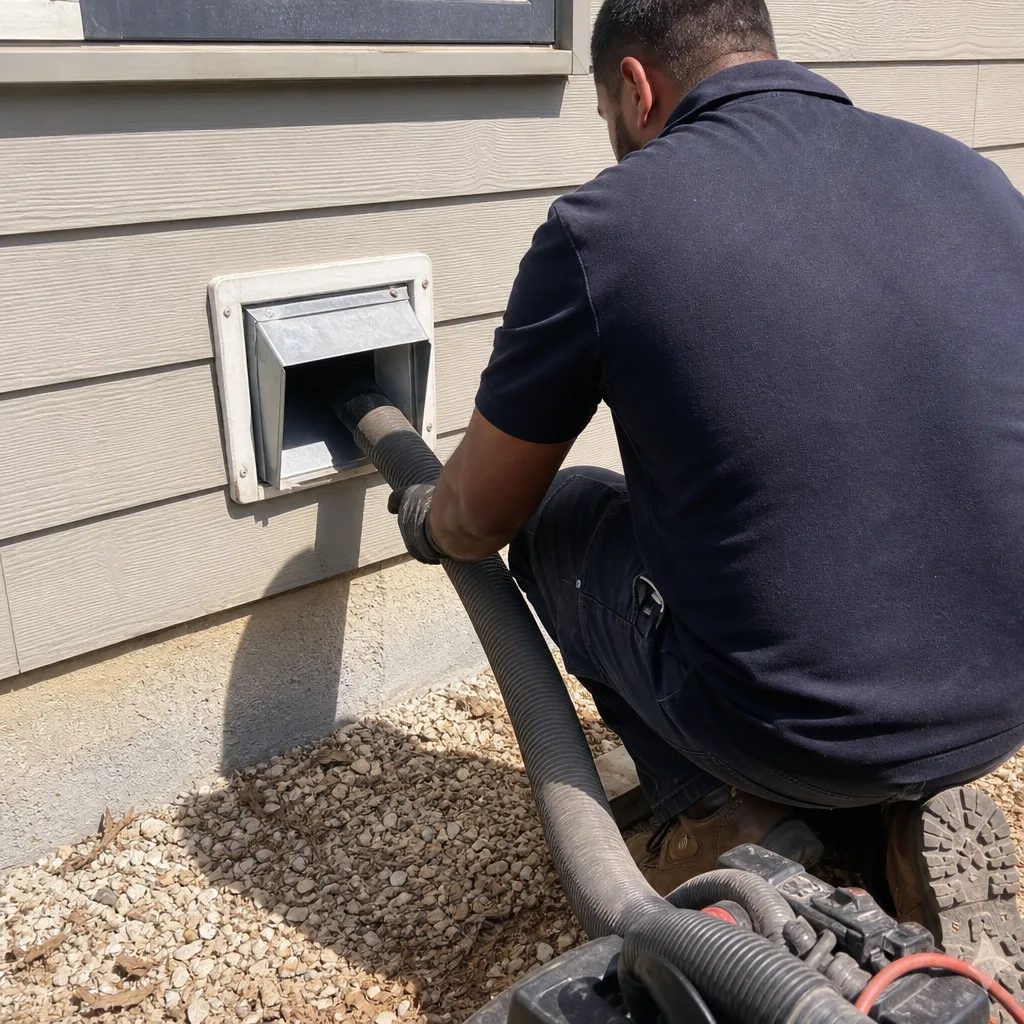
- Dryer vent cleaning. This is the most undervalued add-on in the trade. Your dryer vent is a separate system from your HVAC ducts, and it fills with lint, which is genuinely flammable. A dryer vent cleaning in San Antonio typically adds $75 to $125 to a duct cleaning visit and should be done every 1 to 2 years. If your dryer vent exits through the roof, as many San Antonio two-story homes’ do, it’s harder to clean and worth more. This is not an upsell; it’s a separate service with real safety value.
- Evaporator coil cleaning. If your AC coil has a visible felt of dust on it, which is common in older homes and homes with pets, cleaning it can improve airflow and efficiency. Expect $100 to $200 additional depending on access. This one is only legitimate if the technician takes off the access panel, shows you the coil, and shows you the after photos. If they “clean” the coil without removing the panel, they didn’t clean it.
Usually safe to skip:
- Chemical foggers and “sanitizing mists.” A technician sprays a pleasant-smelling chemical into the return and tells you it kills mold and bacteria throughout your entire duct system. The product dissipates in days, doesn’t reach most of the surface area claimed, and the company rarely offers any before or after testing to show what it allegedly killed. This is often a $150 to $300 add-on with almost no verifiable benefit.
- “Antimicrobial coatings” applied to the duct interior. There are legitimate antimicrobial products in this industry, but they are typically applied to cleaned metal surfaces as a preventative measure, and the value is debatable for residential flex-duct systems, which is what most San Antonio homes actually have. If a technician can’t explain what the product is, what it’s rated for, and what evidence they’ll show you afterward, treat it as a margin pad, not a service.
- Ozone or shock treatments offered without a diagnosis. If someone is selling you a whole-home ozone treatment and they haven’t identified a specific problem, say mold or persistent odor, you’re being sold a process, not a solution. A legitimate company diagnoses first, then recommends. Anyone recommending first is selling, not servicing.
Why a Written Price Before Work Starts Is Non-Negotiable
Here’s the scenario we hear about most often from San Antonio homeowners who call us after a bad experience. A company quoted $79 over the phone. The technician arrived, looked at one vent, and immediately launched into a reassessment: “Your ductwork is worse than typical, this is going to need the deep package.” Two hours later, the bill was $700, and the homeowner paid because the vacuum was already running and the technician was already in the house.
That dynamic is why a written price before work starts is the single most important requirement you can hold a duct cleaning company to. Not a verbal estimate, not a range, not a “we’ll see once we get in there.” A written price. On paper or in an email. With the scope spelled out.
Here’s what that written price should include:
- Total price for the full system cleaning, in dollars, not per vent.
- Scope of work: supply ducts, return ducts, main trunk, plenum, and every register.
- Equipment to be used: look for brands like Rotobrush or Nikro. These are the professional names in this industry, and they’re a meaningful signal that the company has invested in real negative-air or rotary-brush equipment, not a portable vacuum.
- Any exclusions written down: what’s not included and why.
- Signature of a company representative, or at minimum a statement that the price is locked for the job described.
If a company won’t commit to a number before they’ve opened the first vent, that’s an answer. It’s not that they can’t price the job; it’s that their pricing model depends on escalating once they’re in your home. Respectfully, that’s not a company you want in your home. At Morton’s, the written price is the first thing we hand over, every time, before any equipment comes off the truck. It’s what we’d want if roles were reversed.
Common Mistakes to Avoid
- Believing the $49 special is a real price. It’s not. It’s a customer acquisition cost the company plans to recover through add-ons. The only question is how hard the upsell is. Expect a final invoice between $400 and $800 regardless.
- Paying by the vent without a total price cap. Per-vent pricing without a written cap means the technician sets your final bill. If they want to find 18 vents in your 3-bedroom home, they will. Always ask for the total price in writing before work begins.
- Skipping the dryer vent. It’s the most common service our customers decline and the one with the clearest safety case. Lint is fuel. A clogged dryer vent also makes your dryer run longer, which hits your electric bill every month of a San Antonio summer.
- Accepting before and after photos that aren’t your vents. You’d be surprised how often a company shows generic photos from another job. Ask to see the actual before and after on your own registers. At Morton’s, we show you your ductwork on our equipment before we finish, and we hand you a photo of the clean-up before we leave.
- Falling for chemical fogger add-ons without any testing. It smells nice for a day and costs $200. If they can’t test for what they claim to be killing, don’t buy it.
- Choosing a company that can’t name its equipment. A professional should be able to tell you what machine they use and why. Rotobrush and Nikro are not magic brands, but they are real indicators of a company that invested in professional tools. A technician who deflects the equipment question is often a technician with a Shop-Vac.
- Ignoring the post-clean walkthrough. A job isn’t done when the vacuum stops. It’s done when you’ve seen the system and confirmed the vents are clean, the grills are reseated, and your floors are protected. If they rush the walkthrough, they rushed the job.
When to Call a Professional
Some situations clearly warrant a professional rather than a wait-and-see approach. If you’ve recently completed a renovation and drywall dust has settled through the registers, that’s a call. If someone in your San Antonio home has persistent allergy symptoms that improve when they leave the house, that’s a call. If you’ve adopted a new pet and notice the return grate is cloaked in fur every few weeks, that’s a call. And if your last duct cleaning is a date you can’t quite remember, that’s probably a call too. For more guides & resources on keeping your system clean, visit our blog. Mortons Air Duct San Antonio offers free estimates in San Antonio. Call (903) 354-8393 and a live person will pick up, ask about your home’s size and system, and give you an honest range before anything is scheduled.
Frequently Asked Questions
A legitimate whole-home cleaning for a typical 3-bedroom San Antonio house runs $350 to $550 in 2026. Smaller homes start around $250, and larger or custom homes with multiple systems run $650 to $850. If a flyer price is under $100, you’re looking at a teaser rate, not a real quote. Call (903) 354-8393 for a straight answer based on your specific square footage and vent count.
Cheaper quotes usually mean the company is using per-vent pricing to get in the door, skipping the return side or the main trunk, or planning to make their margin on add-ons once the technician is inside. A $49 quote is not a discount on a $450 job; it’s a different, worse job with a sales pitch attached. The appliance-level rule applies here: if a price is too far below the market range, the service being sold is not the same service other companies are quoting.
Ask to see before and after photos of your own registers and returns, taken during the job. A legitimate company will show you the duct interior on their equipment before they finish. At Morton’s, that includes a photo of the clean-up before the crew leaves, so you have visual proof of both the work and the state we left your home in.
For most San Antonio homes with pets or kids, every 3 to 5 years is the honest interval. Homes with multiple shedding pets, recent renovations, or ongoing allergy concerns in the household may need it more often. Homes in newer developments with tight construction and no pets can sometimes go longer. The San Antonio climate matters here; our systems run hard for eight-plus months a year, so dust loading accumulates faster than it does in cooler cities.
For most San Antonio homes, flat-home pricing is the better deal because it caps your total and removes the technician’s incentive to find extra vents. Per-vent pricing can sometimes work out slightly lower on very large homes with many vents, but only if the company gives you a written total before starting. The structure matters less than the commitment to a number. If they won’t put a figure on paper, walk away.
Look for professional negative-air or rotary-brush systems from brands like Rotobrush or Nikro. These machines create genuine negative pressure in the ductwork and agitate debris loose rather than just loosening it partially. A portable vacuum is not the same thing. Feel free to ask the company what equipment they run before you book. We’ll answer that question for any homeowner who asks, and you should expect the same from anyone you call.
The Bottom Line
Air duct cleaning in San Antonio in 2026 costs $350 to $550 for a typical mid-sized home, $250 to $350 for smaller ones, and $650 to $850 for large homes with multiple systems. The gap between a $49 flyer and a $500 quote is not a discount; it’s a different service, a different pricing model, or both. Hold out for a company that gives you a written whole-system price before work starts, names its equipment, shows you the inside of your own ducts, and leaves your floors the way they found them. That’s not too much to ask. That’s the baseline. If you’d like an honest price for your specific home, call Mortons Air Duct San Antonio at (903) 354-8393. We’ll answer the phone, ask about your house, and tell you what it costs before anyone turns a screw.
Written by Paul Adeyemi, Owner at Mortons Air Duct San Antonio, serving San Antonio since 2005.
See the difference
 Before
 After
After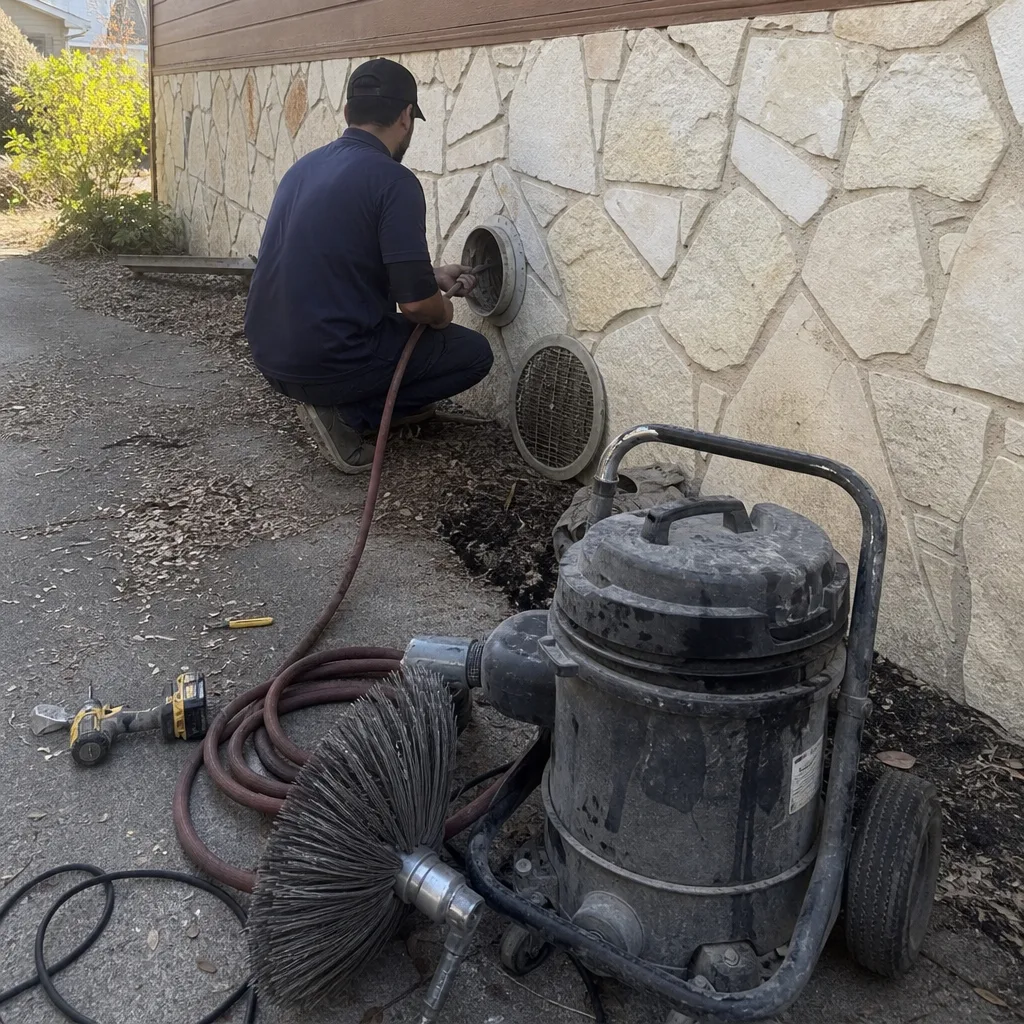 Before
 After
After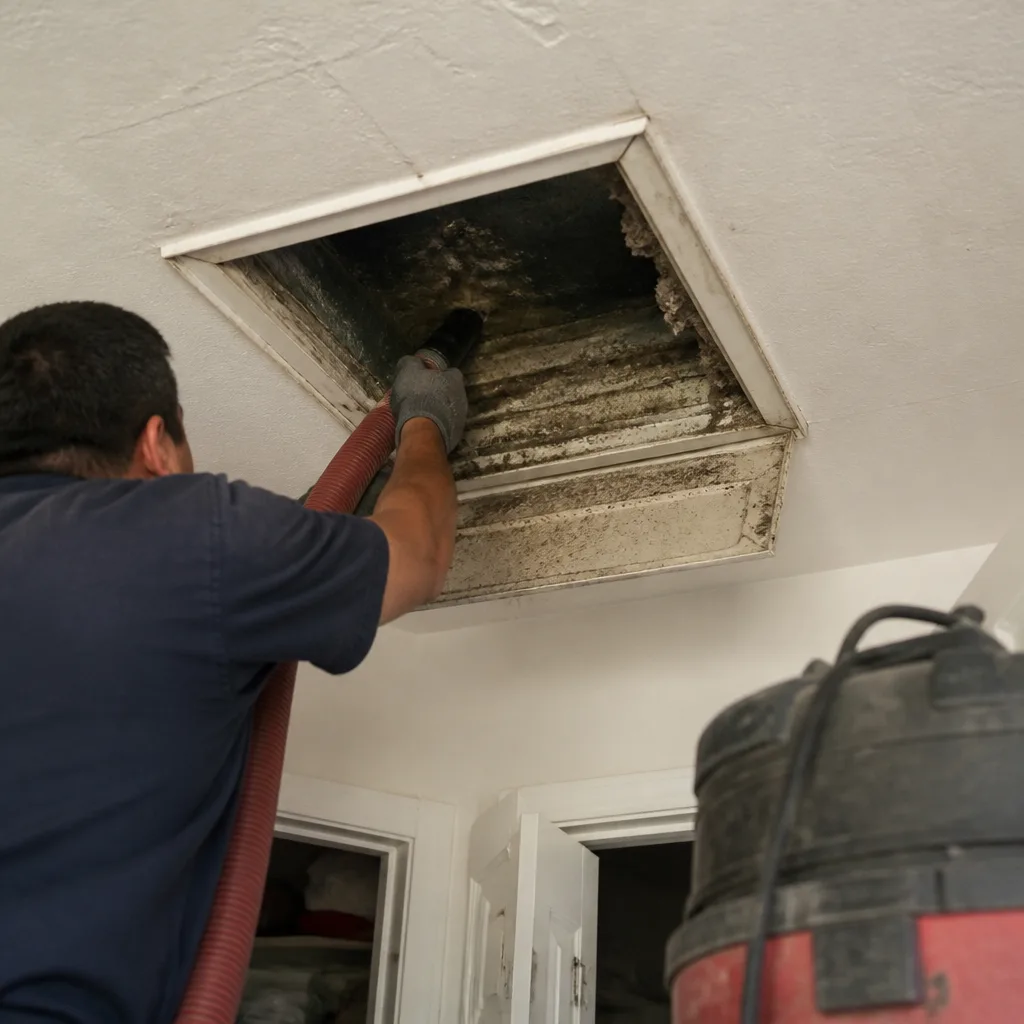 Before
 After
After